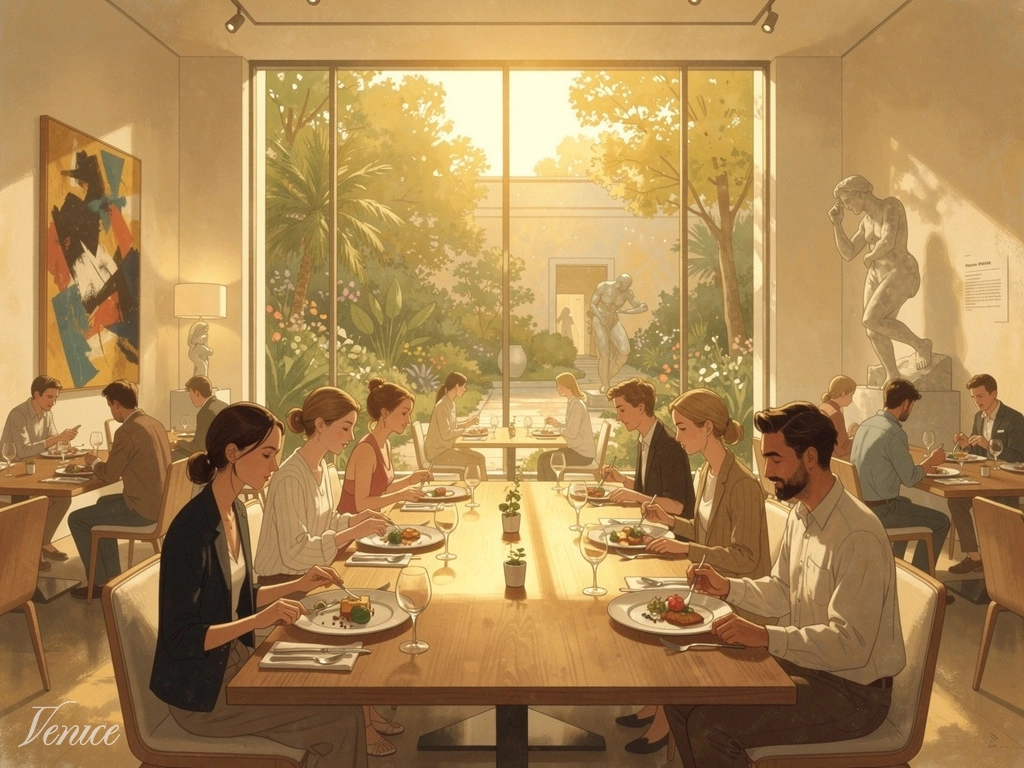
In the shaded parkland of Heide Museum of Modern Art, something extraordinary is happening in the kitchen. Chef Laura Boulton has transformed the museum's dining space from a simple café into a sophisticated destination where every dish tells a story inspired by the art on the walls and the historic gardens outside.
"It's not just a cafe anymore," Boulton explains. "The food is more refined, and people are starting to come here as a celebration space. They're catching up with friends and having a really nice glass of wine and pasta, or sitting down for a steak."
Boulton arrived at Heide Kitchen in 2023, bringing with her a deep commitment to sustainable, zero-waste cooking honed at venues like Kensington's Cassette. She immediately fell in love with the space opposite the museum entrance and began reshaping its identity into something resembling what you might find at a small winery: garden-driven, produce-forward, and thoughtfully seasonal.
What sets Heide Kitchen apart is its unique relationship with art. Each season, Boulton designs dishes that symbolically connect to current exhibitions. For the John Nixon retrospective, her spring gnocchi became a visual homage to the abstract painter's eye-popping colors—chickpea pasta on white cashew cream, dressed with flowers, blanched greens, pickled pumpkin, and candied beetroot. "When I built the dish, I wanted it to be like a spring garden," she says. "It's coming out on the plate looking exactly like that."
For the Nell exhibition "Face Everything," which uses everyday objects as animated muses, Boulton found culinary parallels. "Nell uses everyday items that bring people joy and make them smile. I feel like my menu does the same. The everyday ingredients we bring to life create a symphony of smiles and colour."
The connection extends beyond the galleries to the grounds themselves. The kitchen gardens, originated by museum co-founder Sunday Reed in 1934, remain integral to Heide's identity. Reed saw the gardens as a way to nourish the bodies of the artists who came to nourish their souls—a philosophy Boulton continues.
"There's a storytelling element to the food and the gardens that's so cohesive," Boulton reflects. Visitors can order drinks made with garden ingredients, then stroll through those same garden spaces—or eat art-inspired dishes before viewing the works themselves.
"They're individual experiences," she says, "but there's a symbiosis that's really beautiful to reflect on. It's such a nice thing to be able to experience that all in one place."